What dementia care at home includes
Dementia slowly takes away memory, judgement and the ability to manage daily life. The World Health Organization describes it as a set of symptoms caused by diseases that damage the brain, and Alzheimer's disease is the most common of those diseases. There is no cure yet. What helps most, for most families, is good daily care in a place your parent recognises, from people who understand what is happening.
Our Dementia Care plan is that daily care. It can be daily visits, nights, or a caregiver living in, depending on the stage your parent has reached and how much help they need. Whatever the hours, the work follows a care plan the nurse writes for your parent.
- A steady routine: getting up, meals, medicines, activity and bed at about the same times each day
- Help with washing, dressing and the toilet, done slowly and with plenty of explanation
- Regular meals and drinks, with a record of what was eaten and drunk
- Medicines prescribed by your parent's doctor, given exactly as written in the care plan and recorded every time
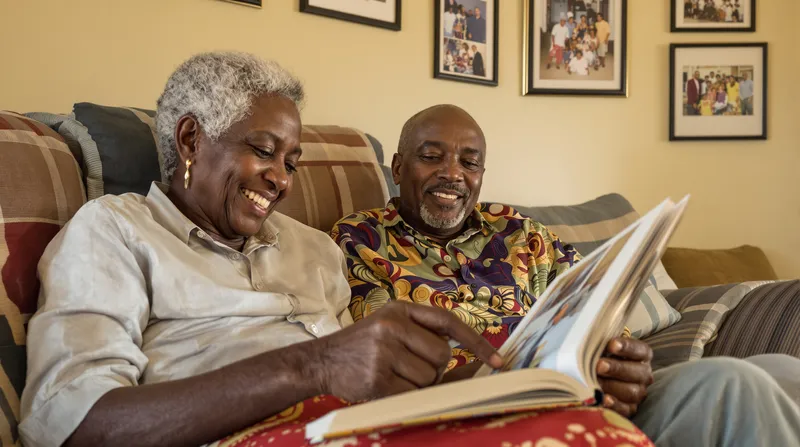
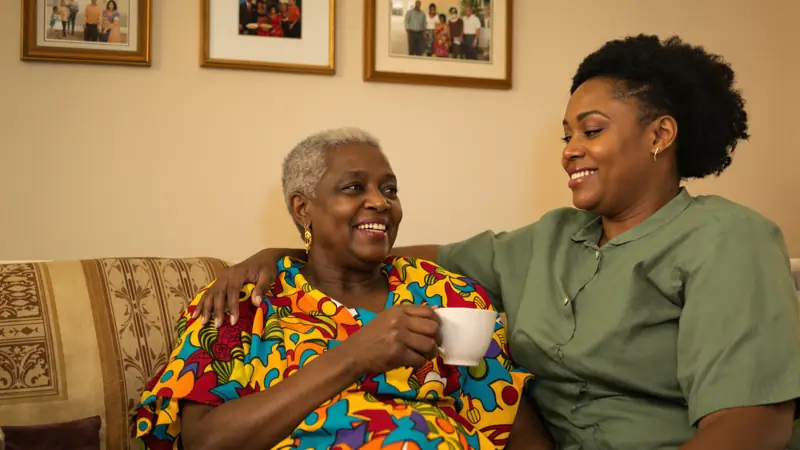
- Company and simple activities they enjoy: music, prayer, old photos, chores they used to do
- A safety plan for the house, the gate, the gas and the generator
- Watching for wandering, evening confusion and sudden changes, and alerting the family and nurse at once
- A report after every visit, checked and signed by the nurse before it reaches the family portal
Before any caregiver works with a family, we check their identity document, a guarantor and two references. Every caregiver is trained and supervised by a registered nurse.
How it starts: a nurse assessment at home
Every Dementia Care plan starts with a registered nurse visiting your parent at home. If you live abroad, you can join by video call. The nurse spends time with your parent as well as with you, because how Mum behaves with a stranger in her own sitting room tells the nurse a lot.
The nurse will ask about:
- What has changed and when you first noticed it, with examples
- Whether a doctor has given a diagnosis, and which clinic or hospital your parent attends
- Every medicine your parent takes, including herbal remedies, with doses and times
- Their usual day: when they wake, eat, nap, pray and go to bed
- Which language they are most comfortable in now, and the names they answer to
- Evenings and nights: restlessness, getting up, wanting to go out
- The house itself: the gate, stairs, the toilet, gas, the generator and lighting
- Who in the family does what, and who the caregiver should call first
Within 48 hours you receive a written care plan and a monthly quote. The plan sets out the hours, the routine, the safety steps and the emergency plan: which hospital your parent goes to and how they get there. The family arranges the designated hospital and the transport, and pays the hospital directly. We never handle medical bills.
An example week
An illustration, not a real family. Your parent's nurse plans the actual days, times and tasks with you at the assessment.
- MondayThe caregiver arrives at the same time as every weekday, clocks in on their phone at the home and greets Mummy by the name she likes to be called. Breakfast at her usual seat, then morning medicines given, watched until swallowed and recorded.
- TuesdayA short walk round the compound before the heat, then shelling beans together at the kitchen table. Mummy asks three times where her husband is. The caregiver answers gently each time and writes it in the report.
- WednesdayBath day. The caregiver checks the water temperature, keeps her covered with a wrapper and lets her wash her own face and arms. Her skin is checked and nothing new is found.
- ThursdayThe caregiver stays into the late afternoon, closes the curtains and puts the lights on before dark, and plays the highlife she loves. She is more settled than last Thursday, and the report says so.
- FridayThe weekly video call with her son abroad, at the same time as always. The caregiver holds the phone steady and reminds her who is calling before he speaks.
- SaturdayHer daughter takes over for the weekend. She reads the week's signed reports on the family portal first, so she knows Mummy has been drinking less in the afternoons.
- SundayChurch with the family. The nurse, who has checked and signed every report that week, calls the daughter to agree a plan for more drinks in the afternoon and to keep the early lights routine going.
Routines that make each day easier
People with dementia usually cope best when today looks a lot like yesterday. Fewer surprises mean fewer decisions, less fear and fewer arguments. The routine in the care plan is written around your parent's own habits, so the day still feels like theirs.
The caregiver follows NHS advice on talking with someone who has dementia: short, clear sentences, one question at a time, and time to answer. They offer simple choices, such as tea or pap, and avoid quizzing your parent about names and dates. When Dad says he must go to the office, they talk with him about his work and then offer lunch, instead of telling him he retired years ago.
Many parents slip back into the language of their childhood as dementia progresses. Tell the nurse whether your parent now speaks mostly Yoruba, Igbo, Hausa or pidgin, and we will tell you honestly whether we can match a caregiver who follows them.
If your parent pushes the caregiver away at first, that is common. Strangers in the house can be frightening for someone whose memory is failing. Going slowly, keeping the same caregiver where possible and letting a family member be there for the first visits usually helps.
Safety at home
Dementia affects balance, judgement and the ability to spot danger. A Lagos house has its own hazards, and the nurse goes through them with you at the assessment. The caregiver then checks them as part of every visit.
- Gas turned off at the cylinder when the cooker is not in use, and matches and lighters kept out of sight
- The generator outside, well away from doors and windows, and never in the house, garage or a closed boy's quarters
- Kerosene, insecticide, bleach, knives and spare medicines locked away
- A clear, lit path to the toilet, with a rechargeable lamp ready for when NEPA takes light
- Loose rugs, wires and buckets moved off walkways, and grab rails by the toilet if possible
- Bath water checked for temperature every time
- Keys to burglary-proof doors kept in one known place, so nobody is trapped in a fire, and your parent never locked in alone
A fall can lead to a broken hip and a long hospital stay. Most of what prevents falls is simple, and the caregiver does it every day.
Wandering and sundowning
The NHS lists restlessness, pacing and wandering out of the home among the common changes in dementia. On a busy Lagos road, a parent who walks out of the gate or gets on a bus and cannot say where they live is in real danger.
- The gate stays locked, and the gateman or security knows your parent must not go out alone
- Your parent carries ID with a family phone number: a card in the pocket, a bracelet or a tag sewn into clothing
- The family keeps a recent photo on their phones
- The caregiver notes when and why your parent tries to leave, because there is often a pattern, such as needing the toilet, hunger, boredom or the late afternoon
- If your parent goes missing, the caregiver alerts the family and the nurse at once and follows the plan you agreed
Many people with dementia become more confused, anxious or restless in the late afternoon and evening. This is often called sundowning. What tends to help is a calm routine, daylight and activity earlier in the day, and good light as the evening comes in. The caregiver closes curtains and puts the lights on before dark, keeps the house quiet, and offers something familiar to do.
If the nights have become the hard part, Night Care puts a trained caregiver in the house overnight. If your parent should not be alone at any time, Live-in Care is the better fit, and the nurse will say so.
Working with your family and your parent's doctor
Your parent's doctor stays in charge of their treatment. Our nurse writes the care plan around what the doctor has said and prescribed, and the caregiver follows it. Bring the clinic letters and the medicine list to the assessment, and tell the nurse whenever anything changes after a clinic visit.
Nigeria has few memory clinics. In Lagos, LASUTH in Ikeja runs a geriatrics clinic, and LUTH lists old age psychiatry in its Department of Psychiatry. Call ahead to ask about memory assessment and how to book. The Gabi Williams Alzheimer's Foundation in Lagos works on awareness and support for carers.
Read: early signs of dementia, and getting a diagnosis in Lagos
Dementia still carries a lot of stigma in Nigeria. Some relatives or neighbours may say the confusion is witchcraft, a spiritual attack or just old age. Researchers have recorded families hiding relatives with dementia because of these beliefs. Dementia is caused by disease in the brain. Prayer and church can be a real comfort to your parent, and the caregiver can help them keep going to service. Being taken away from home and from familiar faces usually makes confusion worse, so please talk to the nurse before any plan to move your parent, even for a short time.
Families often disagree about care, especially when some siblings are in Nigeria and some are abroad. The signed reports give everyone the same facts. A short family call every few weeks, with the reports in front of you, helps agree who does what.
What we do not do
We want to be clear about the limits, because they keep your parent safe.
- We do not diagnose dementia or any other condition. Only a doctor can do that.
- We do not prescribe, change doses, or give anything that is not in the care plan, including remedies from the family medicine cupboard.
- Caregivers never give injections or do clinical tasks.
- We never lock your parent in a room or leave them locked in the house alone.
- We do not handle medical bills. The family pays the hospital or clinic directly.
- We do not describe our caregivers as dementia specialists. They are trained caregivers, supervised by a registered nurse who writes and reviews the care plan.
A sudden change over hours or days is not usually the dementia itself. It can be delirium from an infection, malaria, dehydration, a new medicine or a stroke. If the caregiver sees a sudden change, they alert the family and the nurse at once, and in an emergency follow the plan you agreed: the transport you arranged, to the designated hospital.
If you live abroad
If you are in London, Houston or Toronto and your parent in Lagos is starting to forget things, you can still do a lot from a distance.
- Join the nurse's home assessment by video call
- Read every signed visit report on the family portal, from any time zone
- Get urgent alerts, day or night, if something happens
- Set up a video call with your parent at the same time each week, and the caregiver can help with the phone
- Pay by card or bank transfer
Brothers and sisters in different countries can all read the same reports, which saves a lot of arguments about what is really going on.
What it costs, and how to start
Home care with us starts from ₦100,000 a month. The cost of Dementia Care depends on how many hours of care your parent needs, whether that is visits, nights or live-in cover, and where in Lagos they live. Dementia changes over time, and the nurse will talk with you before the plan, or the cost, changes.
It starts with a home assessment by a registered nurse. Within 48 hours you receive a written care plan and a monthly quote. We cover Lagos Island and the Mainland. Abuja, Port Harcourt and Oyo State have a waiting list.
Sources
Facts on this page last checked on 3 Oct 2026.
- World Health Organization: Dementia fact sheet
- Alzheimer's Disease International: Dementia facts and figures
- NHS: Living with dementia
- NHS: Communicating with someone with dementia
- NHS: Changes in behaviour in dementia
- NHS: Making your home dementia friendly
- NHS: Looking after someone with dementia
- NHS: How dementia is diagnosed
- Alzheimer's Society: Sundowning and dementia
- Alzheimer's Association: Wandering
- Nwakasi et al., Innovation in Aging 2020: dementia stigma in Nigeria
- LASUTH: geriatrics clinic announcement
- LUTH: Department of Psychiatry
- Gabi Williams Alzheimer's Foundation