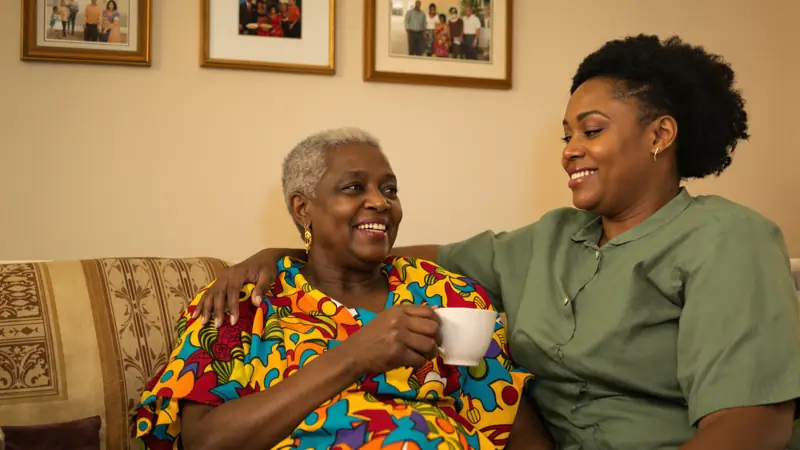
Dementia meaning, in simple words
Dementia is a name for a set of symptoms. It describes what is happening to a person: memory that keeps slipping, trouble thinking things through, getting lost or confused, and changes in mood and behaviour that make everyday life harder. These symptoms are caused by diseases that slowly damage the brain.
Dementia is not normal ageing. Many older people forget a name now and then and remember it later. With dementia, the forgetting keeps getting worse and starts to stop a person managing their own life, such as cooking, paying bills, taking medicines or finding their way home.
The World Health Organization (WHO) gives a sense of how common it is. In 2021, 57 million people worldwide were living with dementia, and over 60% of them lived in low- and middle-income countries. There are nearly 10 million new cases every year. Dementia is now the seventh leading cause of death worldwide.
There is no cure yet. That does not mean nothing can be done. WHO notes that physical activity, social engagement, cognitive stimulation and support for carers can improve quality of life and daily functioning. Much of that support happens at home, every day, through the people around your parent.
If you are still at the stage of wondering whether something is wrong, our earlier guide covers the warning signs, how they differ from normal ageing, conditions that look like dementia but can be treated, and where to get a diagnosis in Lagos.
Read: Early signs of dementia in elderly parents, and getting help in Nigeria
Alzheimer's vs dementia: what is the difference?
Think of the word fever. Fever tells you the body temperature is high, but not why. The cause could be malaria, typhoid or a chest infection. Dementia works the same way. It tells you the brain is not coping, and Alzheimer's disease is one of the illnesses that can cause it.
So everyone with Alzheimer's disease will develop dementia, but not everyone with dementia has Alzheimer's. Alzheimer's is simply the most common cause. WHO says it may contribute to 60 to 70% of cases.
Other causes include vascular dementia, which follows damage to the blood supply in the brain, often after strokes. There is also dementia with Lewy bodies, which can bring vivid visual hallucinations and stiffness, and frontotemporal dementia, which often changes personality and behaviour first. Some people have more than one type at once.
Why does the name matter at home? The type can affect which medicines the doctor chooses and which problems to expect first. For daily care, though, much of the advice below applies whatever the cause. Our early signs guide explains each type in more detail.
Symptoms of Alzheimer's disease, stage by stage
Alzheimer's usually develops slowly, and every person moves at their own pace. The NHS notes that the rate at which symptoms progress is different for each individual. Doctors and charities often describe three broad stages. They overlap, and your parent may show signs from two stages at once.
Early stage (mild). What you notice: Mum forgets recent conversations or events, asks the same question again, misplaces things and struggles to find the right word. She may find planning harder, such as organising a family event or keeping track of money. Anxiety and low mood are common. What she can still do: the Alzheimer's Association says a person at this stage may still function independently and take part in social activities. What helps at home: gentle reminders, a calendar on the wall, a pill organiser checked by someone else, and a quiet word about money and legal plans while she can still take part in those decisions.
Middle stage (moderate). What you notice: memory gets clearly worse. Dad may get lost, mix up day and night, or not know what time of year it is. The NHS lists repetitive behaviour, poor sleep, mood swings, suspicion of others, seeing things that are not there and trouble with speech. Wandering and accidents with the toilet often start here. What he can still do: the Alzheimer's Association says people can still take part in daily activities with help, so let him do the parts he can. What helps at home: a steady daily routine, someone present for most of the day, help with washing and dressing, and close attention to safety. This is typically the longest stage and can last for many years.
Late stage (severe). What you notice: very little speech, difficulty walking, trouble swallowing, weight loss and loss of bladder and bowel control. Alzheimer's Society notes that people spend more time sitting or in bed, and that falls, blood clots and infections such as pneumonia become more likely. What your parent can still do: respond to a familiar voice, touch, music and facial expressions. What helps at home: round-the-clock care with all personal care, careful feeding, regular turning if they are in bed, and skin care.
A good daily routine
People with dementia cope best when each day looks much like the last. A fixed routine means fewer decisions, less confusion and fewer arguments. Write it down and stick it on the fridge so everyone, including a house help or a visiting aunty, follows the same plan.
- Get up, wash and dress at about the same time each morning.
- Breakfast at the same seat at the table, with the same cup.
- Morning medicines straight after breakfast, given by the same person where possible.
- Something active before the afternoon heat: a short walk in the compound, sweeping the veranda, sorting beans or folding clothes.
- Lunch, then a rest in a cool room.
- A familiar activity in the afternoon: music, a phone call with a grandchild, a visit from a church or mosque friend.
- Dinner early, curtains closed and lights on before dark.
- A calm bedtime routine: wash, toilet, nightdress, prayers, bed.
Talking with Mum or Dad
Communication changes as dementia moves on, and it is often what upsets families most. A few habits make a big difference.
- Speak clearly and slowly, in short sentences, as the NHS advises. Ask one question at a time and wait for the answer.
- Offer simple choices. "Would you like tea or pap?" works better than "What do you want for breakfast?"
- Use the language they are most comfortable in. Many parents slip back to Yoruba, Igbo, Hausa or pidgin as dementia progresses, even if they spoke English at work for decades. Caregivers should be able to follow them.
- Do not argue or correct. If Dad says he must go to the office, talking about his work and then offering lunch calms him far better than telling him he retired twenty years ago.
- Do not quiz them. "Do you know who I am?" puts them on the spot. Say instead, "Hello Mummy, it's Tolu."
- Turn off the TV or generator noise near you when you talk, and sit where they can see your face.
- Use touch, a smile and a calm voice. Even when words are gone, these still get through.
If you are calling from abroad, video calls at the same time each day work better than surprise calls. Keep them short and cheerful, and let the caregiver help hold the phone.
Eating and drinking
Weight loss is common in dementia. Your parent may forget to eat, forget they have eaten, struggle with cutlery or lose interest in food. Later on, swallowing can become difficult.
- Serve familiar food they have always liked, in small portions, several times a day.
- Soft foods such as yam porridge, moi moi, pap, soups and mashed plantain are easier to chew and swallow.
- Sit and eat with them. Many people eat better when someone eats beside them.
- Offer drinks often. In the Lagos heat, older people with dementia can become dehydrated without asking for water. Keep a cup in sight and offer it every hour or so.
- Watch for coughing or choking at meals, food held in the mouth, or dark, strong urine. Report these to the nurse or doctor.
- Weigh them once a month if you can, and write it down.
Medicines
Mistakes with medicines are one of the most common dangers at home. Someone with dementia may take a dose twice, skip it, or hide tablets.
- Use a weekly pill organiser with morning, afternoon and night boxes, filled by one responsible person.
- Give each dose and watch it swallowed. Do not leave tablets on the table for later.
- Never leave a week's supply within reach. Keep the rest locked away.
- Keep one written list of every medicine, dose and time, including herbal remedies.
- Take that list to every clinic visit, and ask the doctor before adding anything new.
- Record any dose that is refused or spat out, and tell the nurse.
Washing, dressing and the toilet
Personal care can feel like an invasion to someone who no longer understands why a stranger is helping them undress. Go slowly, explain each step, and let them do as much as they can.
- Keep the same time of day for bathing. A warm bucket bath or a shower seat is often less frightening than a full bath.
- Cover them with a wrapper or towel as you wash, and keep the door shut.
- Lay out clothes in the order they go on. Front-opening clothes, elastic waists and slip-on shoes are easier.
- Let Dad choose between two shirts. Small choices help him keep some control.
- Take them to the toilet at regular times, such as after meals and before bed. Many accidents happen because they cannot find the toilet or cannot undo their clothes in time.
- A night light and a clear path to the toilet help at night. Pads and a commode can help later on.
- Check the skin every day, especially the bottom, hips and heels, for redness or sores.
If your parent refuses help from a caregiver, that is common and usually settles with patience and the right approach.
Sleep and evening confusion
Many people with dementia become more confused, restless or upset in the late afternoon and evening. This is often called sundowning. It can come with pacing, wanting to "go home" even when they are home, or being awake at night.
Daylight, activity in the morning, limiting tea, coffee and Coke after lunch, short naps only, and putting the lights on before it gets dark all help. Our separate guide goes into the causes and what to do.
Wandering and safety in a Nigerian house
Wandering usually starts in the middle stage. A parent who walks out of the gate on a busy Lagos road, or gets on a bus and cannot say where they live, is in real danger. The house itself also needs a fresh look.
- Keep the gate locked and tell the gateman or security that Mum must not go out alone.
- Make sure your parent always carries ID with a family phone number: a card in the pocket, a bracelet or a tag sewn into clothing.
- Keep a recent photo on your phone in case you need to search.
- Turn the gas cylinder off at the valve when the cooker is not in use, or remove knobs from the cooker. Hide matches and lighters.
- Keep the generator outside, well away from doors and windows, and never in the house, garage or a closed boy's quarters. Generator fumes can kill quietly in a room.
- Burglary-proof doors protect the house, but they can also trap your parent in a fire. Keep the keys in one known place that carers can reach quickly, and never lock your parent in alone.
- Lock away kerosene, insecticide, bleach, sharp knives and any spare medicines.
- Set the water heater low or check the water temperature before every bath.
Preventing falls
Dementia affects balance, judgement and the ability to spot hazards. A fall can lead to a broken hip and a long hospital stay.
- Clear loose rugs, wires and clutter from walkways.
- Put lights in the corridor and bathroom, and keep a rechargeable lamp ready for when NEPA takes light.
- Fix grab rails by the toilet and in the bathroom, and use a non-slip mat.
- Choose well-fitting slippers with a back, not loose bathroom slippers.
- If the bedroom is upstairs, think about moving it downstairs.
- Get the eyes and hearing checked. Poor sight and hearing add to confusion and falls.
Money and scams
People with dementia lose the ability to judge money early, sometimes before families notice other problems. They may give large sums to visitors, lose cash, or fall for phone and church donation scams.
Agree early, while your parent can still take part, who will manage their money. Set up a simple system for paying caregivers, buying medicines and household spending, and keep receipts. If siblings abroad send money home, agree in writing how it is used and how it is reported.
Making the home dementia-friendly
Small changes help your parent find their way and feel calmer.
- Good light everywhere, especially in passages and the toilet. Dark corners and shadows can frighten people with dementia.
- Labels or pictures on doors: a picture of a toilet on the toilet door, a bed on the bedroom door.
- Contrast helps. A coloured toilet seat on a white toilet, or a plate that is a different colour from the food, is easier to see.
- Less clutter on tables and floors, and fewer mirrors if reflections upset them.
- A large clock and a calendar with the day and date in plain view.
- Family photos on the wall with names written underneath.
Keeping your parent involved
People with dementia still need purpose, company and enjoyment. Doing nothing all day in front of the television often makes confusion and low mood worse.
- Keep church or mosque going for as long as it is comfortable, with someone beside them. Familiar hymns, prayers and recitations often stay in memory long after other things are lost.
- Play the music they loved: highlife, juju, gospel or old Fuji. Many people sing along even when they no longer talk much.
- Look at old family photos together and let them tell the stories, even if the details change.
- Give simple chores they used to do: shelling egusi, folding clothes, watering plants, sweeping.
- Short visits from old friends and neighbours, one or two at a time, are better than a full parlour.
When to see a doctor urgently
Dementia usually changes slowly, over months. A sudden change over hours or days is different. The NHS notes that rapid worsening can come from treatable problems such as infections, stroke or delirium. Get medical help the same day if your parent:
- Becomes suddenly much more confused, sleepy, agitated or sees things that are not there. This can be delirium from a urine or chest infection, malaria, dehydration or a medicine.
- Has a fall, especially if they hit their head, cannot get up or cannot put weight on a leg.
- Stops eating or drinking, or passes very little urine.
- Has chest pain or difficulty breathing.
- Shows signs of a stroke: a drooping face, a weak arm or leg, or slurred speech. Get them to hospital at once in the transport you arranged, because time matters.
- Has a fever, a new cough or burning when passing urine.
Hospitals in Lagos for older parents
Sudden confusion, a drooping face or weakness on one side can be a stroke, not dementia getting worse.
Looking after the family carer
Caring for a parent with dementia is hard work, and it goes on for years. WHO says informal carers provide on average 5 hours of care a day, and women provide 70% of those care hours. In many Nigerian families that load falls on one daughter, one daughter-in-law or the sibling who lives closest.
Carer burnout is real. Signs include constant tiredness, poor sleep, short temper, feeling hopeless and your own health slipping. A carer who is worn out cannot keep a parent safe.
- Share the work. Siblings abroad can cover costs, handle calls with doctors, manage paperwork and plan visits home. Siblings in Nigeria can share days and weekends.
- Hold a short family call every few weeks to agree who does what, and what has changed.
- Bring in a trained caregiver for some hours each day, so the family carer can rest, work and see their own children.
- Plan ahead for the later stages. When your parent needs help day and night, live-in care with a relief caregiver is often the only way to keep them at home without one person collapsing.
How Home Care Nigeria helps
We provide caregivers in Lagos who help with the daily care described in this guide: routine, meals and drinks, medicines, washing and dressing, the toilet, safety and company. Every caregiver is supervised by a named registered nurse who agrees the care plan with your family.
After every visit, the caregiver writes a report, checked and signed by the nurse, showing readings, medicines given or refused, meals and drinks, mood and anything unusual. If something worrying happens, such as a fall, a sudden change in confusion or a refused medicine that matters, we alert the family straight away. Families abroad can follow the reports online.
For the later stages, we offer live-in care with a relief caregiver, so your parent has someone with them day and night.
Common questions
What is the meaning of dementia?
Dementia is an umbrella term for a group of symptoms, including memory loss, confusion, difficulty thinking and changes in mood and behaviour, caused by diseases that damage the brain. The symptoms get worse over time and make it hard to manage everyday life. Dementia is not a normal part of ageing.
What is the difference between Alzheimer's and dementia?
Dementia describes the symptoms. Alzheimer's disease is one of the illnesses that causes them, and the most common one. The World Health Organization says Alzheimer's may contribute to 60 to 70% of dementia cases. Other causes include vascular dementia, dementia with Lewy bodies and frontotemporal dementia.
What are the symptoms of Alzheimer's disease?
Early on, the main symptom is memory loss: forgetting recent conversations, repeating questions, misplacing things and struggling for words. Later come disorientation, getting lost, poor sleep, mood swings, suspicion, hallucinations and needing help with daily tasks. In the late stage, people may lose speech, have trouble swallowing and walking, lose weight and become incontinent.
What are the stages of dementia?
Alzheimer's is usually described in three stages. In the early (mild) stage, a person may still live fairly independently. In the middle (moderate) stage, which is typically the longest, they need growing help with daily life. In the late (severe) stage, they need help with all personal care around the clock. Each person moves at their own pace.
Can dementia be cured?
No. There is currently no cure for dementia. Some medicines can help certain symptoms for a time, and the World Health Organization says physical activity, social engagement, cognitive stimulation and support for carers can improve quality of life and daily functioning.
How do I care for my mother with dementia at home in Nigeria?
Keep a steady daily routine, speak in short simple sentences in the language she prefers, give small regular meals and plenty of drinks, supervise every medicine dose, and make the house safe: lock the gate, turn off gas at the cylinder, keep the generator outside and make sure she carries ID with a family phone number. Share the work among siblings, and bring in a trained caregiver before the main carer is exhausted.
Why is my dad with dementia suddenly much more confused?
A sudden change over hours or days is not usually the dementia itself. It can be delirium caused by an infection such as a urine or chest infection or malaria, dehydration, a new medicine or a stroke. Take him to a doctor the same day.
Can someone with dementia live at home?
Yes, many people with dementia live at home for years with the right support. In the early stage, reminders and some supervision may be enough. In the middle stage, most people need someone with them for much of the day. In the late stage, care is needed day and night, which is where live-in care can help.
Sources
Facts checked on 3 Oct 2026. Details change, so call ahead before you go.